Smart Manufacturing Starts with Data, Not Machines
When people talk about smart manufacturing, the conversation often jumps straight to robots, sensors, and advanced machinery. While these technologies are important, they are not where smart manufacturing truly begins.
The real foundation of smart manufacturing is data.
Without accurate, connected, and actionable data, even the most advanced machines operate in isolation ,limiting visibility, efficiency, and return on investment.
Why Data Is the True Starting Point of Smart Manufacturing
Smart manufacturing is not just about automating production; it’s about making better decisions across the entire manufacturing value chain — from planning and procurement to production, quality, and delivery.
That level of intelligence is only possible when data flows seamlessly across systems.
1. Data Creates Visibility across Operations
Manufacturers generate data everywhere:
- Production lines
- Inventory systems
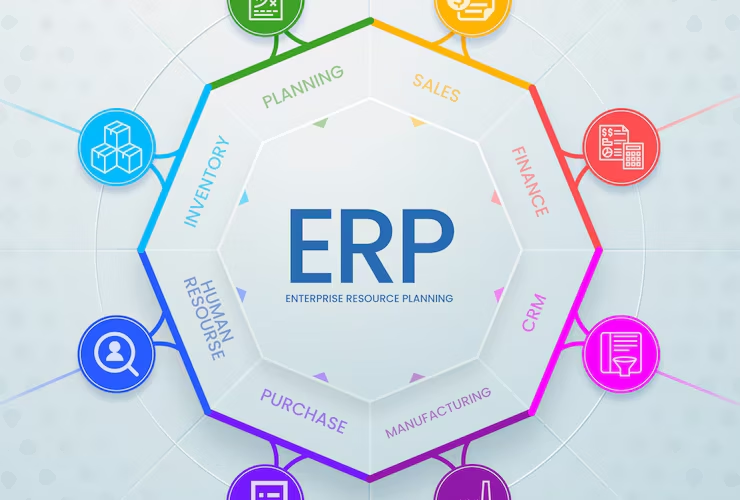
- ERP and MES platforms
- Quality inspections
- Maintenance logs
When this data is fragmented, leaders operate with blind spots.
When it’s connected, manufacturers gain real-time visibility into:
✔ Production performance
✔ Bottlenecks and downtime
✔ Inventory levels
✔ Cost and efficiency drivers
Visibility is the first step toward optimization.
2. Machines Without Data Are Just Automated Silos
Installing advanced machines without integrating data leads to:
- Isolated automation
- Limited insights
- Manual reporting
- Poor coordination between teams
Smart manufacturing requires machines to communicate with systems, not just perform tasks.
ERP, MES, quality systems, and analytics platforms must work together to convert machine output into business intelligence.
3. Data Enables Predictive and Proactive Decisions
Once data is centralized and structured, manufacturers can move beyond reactive management.
With data-driven insights, teams can:
- Predict equipment failures before breakdowns occur
- Anticipate demand and adjust production schedules
- Reduce scrap and rework through trend analysis
- Optimize energy usage and operating costs
This shift from reactive to predictive is what defines a smart factory.
4. Data Aligns Production with Business Goals
Smart manufacturing is not just about producing faster — it’s about producing profitably and sustainably.
When production data is aligned with financial and operational data:
- Cost drivers become visible
- Margin leakage is identified early
- Working capital improves through better inventory control
- Leadership decisions are grounded in facts, not assumptions
Data ensures that shop-floor decisions support business strategy.
5. Data Empowers People, Not Just Technology
Smart manufacturing is as much about people as it is about technology.
When teams have access to reliable data:
✔ Operators respond faster to issues
✔ Supervisors improve planning and coordination
✔ Engineers focus on optimization, not firefighting
✔ Leadership makes confident, timely decisions
Technology supports people — data empowers them.
How Hilniva Enables Data-Driven Smart Manufacturing
At Hilniva, we help manufacturers build the data foundation required for smart manufacturing by enabling:
- ERP and shop-floor data integration
- Real-time production and performance dashboards
- Predictive analytics and reporting
- Automated workflows across operations and finance
Our approach ensures that automation and machinery investments deliver measurable business value, not just technical upgrades.
Machines execute — data decides.
Ready to Build a Data-Driven Manufacturing Strategy?
If your manufacturing operations generate data but struggle to convert it into actionable insights, Hilniva can help.
Connect with us to explore data-driven manufacturing solutions.
Hashtags
#SmartManufacturing #Industry40 #DataDrivenManufacturing #DigitalTransformation #ManufacturingAnalytics #ERP #OperationalExcellence #Hilniva #Automation #ManufacturingLeadership