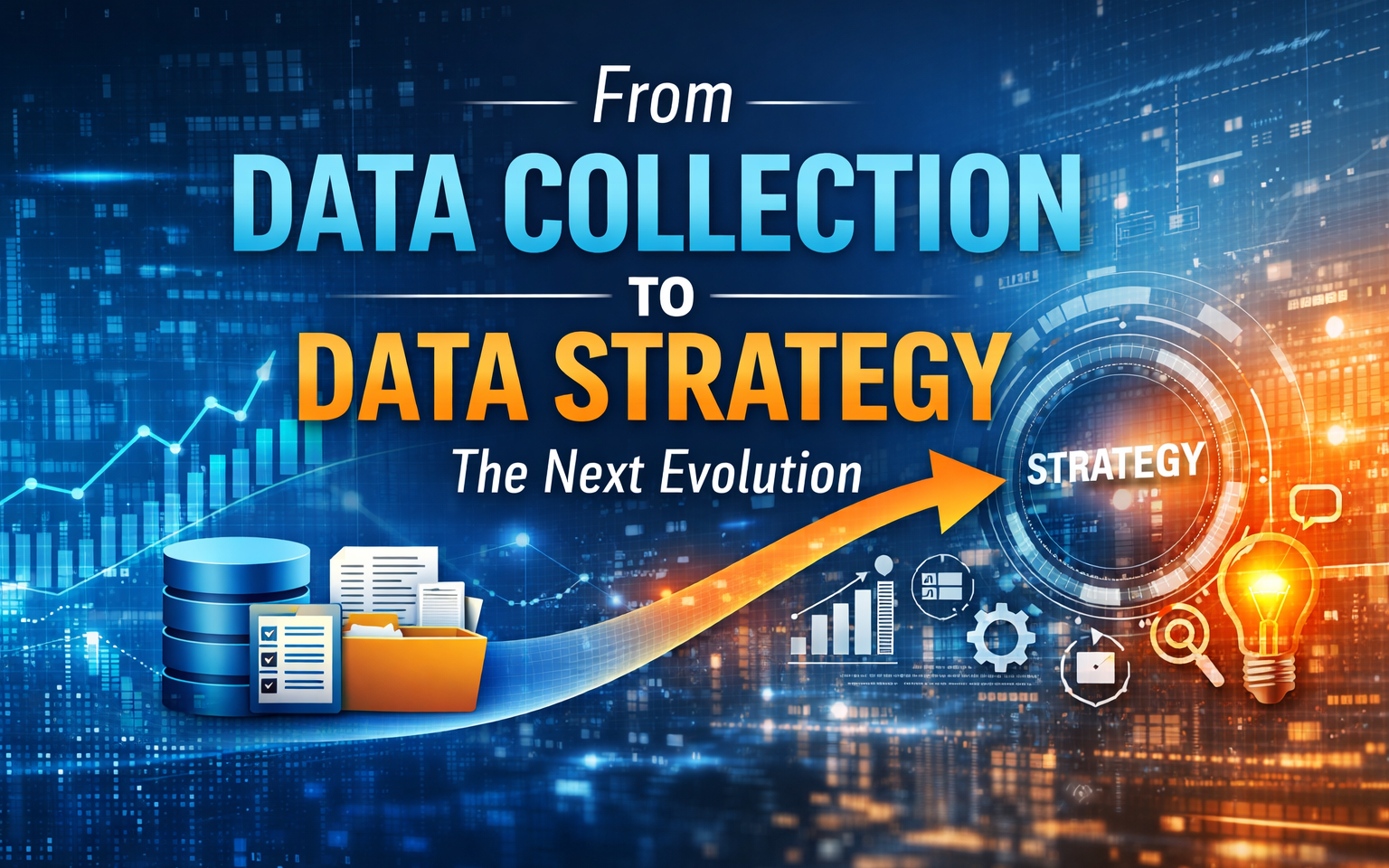
From Data Collection to Data Strategy: The Next Evolution
Over the past decade, organizations have invested heavily in collecting data.
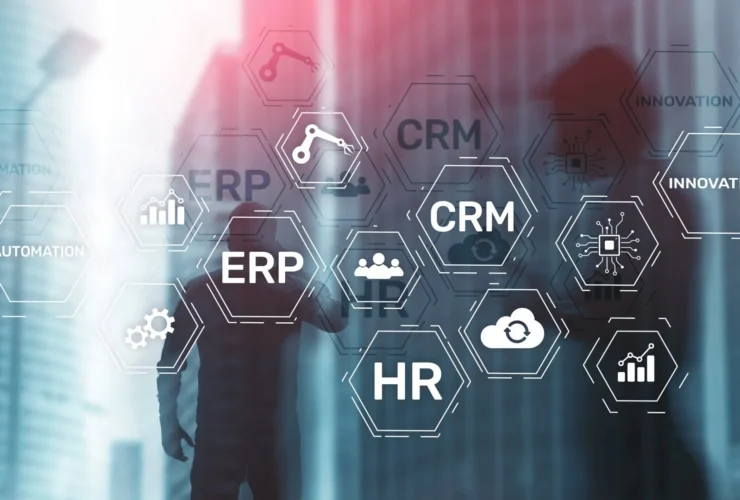
ERP systems, CRM platforms, finance tools, and digital applications generate vast amounts of information every day.
But having data is no longer a competitive advantage.
The real shift happening now is this:
From collecting data… to using it strategically.
The First Phase: Data Collection
Most organizations have successfully built systems that capture data across:
- Finance and accounting
- Sales and customer interactions
- Inventory and supply chain
- Operations and production
This phase solved an important problem — digitizing business activities.
But it also created a new challenge:
Too much data, not enough clarity.
The Problem with Data Without Strategy
Many organizations today face:
- Data spread across multiple systems
- Reports that are complex but not actionable
- Delayed insights
- Limited alignment between data and decision-making
As a result, data exists — but it doesn’t drive outcomes.
Collecting data without a strategy turns information into noise.
The Next Evolution: Data Strategy
A data strategy defines how data is:
✔ Collected
✔ Integrated
✔ Analyzed
✔ Used to drive decisions
It ensures that data is aligned with business goals, not just system capabilities.
What a Strong Data Strategy Looks Like
🔹 1. A Single Source of Truth
Data from ERP, finance, sales, and operations is integrated into a unified platform.
This eliminates confusion and builds trust in the numbers.
🔹 2. Real-Time Visibility
Organizations move from static reports to live dashboards.
Leaders can monitor performance as it happens — not after the fact.
🔹 3. Decision-Focused Insights
Data is presented in a way that answers:
- What changed?
- Why did it change?
- What action should we take?
The focus shifts from reporting to decision support.
🔹 4. Predictive and Forward-Looking Analysis
Advanced analytics enables:
- Forecasting
- Scenario planning
- Risk identification
Organizations move from reactive to proactive management.
🔹 5. Data Embedded in Workflows
Data is no longer separate from operations.
It becomes part of daily workflows through:
- Alerts
- Automated triggers
- KPI-driven processes
This ensures insights lead directly to action.
Why This Shift Matters
Organizations that move from data collection to data strategy gain:
✔ Faster and more confident decisions
✔ Improved operational efficiency
✔ Better financial control
✔ Stronger competitive advantage
Those that don’t risk being overwhelmed by data without direction.
The Role of Technology in Data Strategy
Technology enables data strategy through:
- ERP integration
- Real-time dashboards
- Automation
- Analytics platforms
But technology alone is not enough — it must be aligned with business objectives.
How Hilniva Enables Data Strategy
At Hilniva, we help organizations transform data into a strategic asset by enabling:
- ERP-driven data integration
- Real-time dashboards and analytics
- Automation of data flows
- Insight-driven decision frameworks
We help businesses move beyond data collection to data-driven execution.
Final Thought
Collecting data is the first step.
Using it strategically is what creates value.
The next evolution is not about having more data —
it’s about making data work for the business.
Connect with us to explore more.
#DataStrategy #BusinessIntelligence #DataDriven #DigitalTransformation #ERP #Analytics #DecisionMaking #Hilniva #Leadership #DataInnovation