

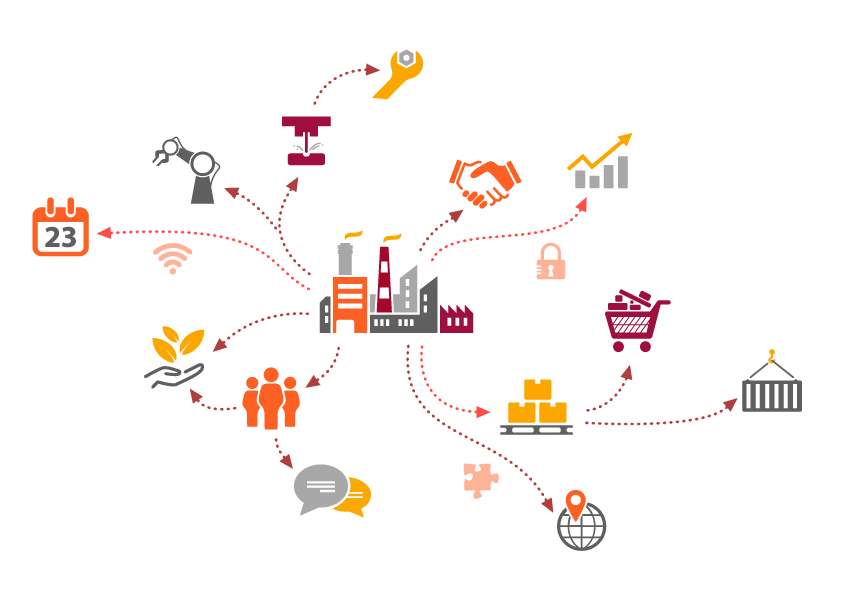
The Role of Technology in Building Resilient Supply Chains
In recent years, global supply chains have faced unprecedented challenges — from disruptions in logistics and fluctuating demand to geopolitical uncertainties and rising operational costs.
These challenges have made one thing clear:
Resilience is no longer optional — it is essential.
To build resilient supply chains that can adapt to uncertainty, organizations are increasingly turning to technology-driven solutions.
Why Supply Chain Resilience Matters
A resilient supply chain is one that can anticipate, respond to, and recover from disruptions quickly.
Without resilience, organizations risk:
- Production delays
- Inventory shortages
- Increased operational costs
- Missed customer commitments
Businesses that build resilient supply chains can maintain stability even during unexpected disruptions.
Visibility: The Foundation of Resilience
One of the biggest challenges in supply chain management is limited visibility.
When information about inventory, production, and logistics is scattered across systems, it becomes difficult to respond quickly to disruptions.
Modern technologies such as ERP platforms and integrated analytics provide real-time visibility across the supply chain.
This enables organizations to:
✔ Monitor inventory levels
✔ Track supplier performance
✔ Identify delays early
✔ Make faster operational decisions
Automation Improves Supply Chain Agility
Manual processes often slow down supply chain operations.
Technology-driven automation can streamline activities such as:
- Purchase order processing
- Inventory updates
- Vendor communication
- Logistics coordination
Automation reduces operational delays and allows organizations to respond quickly to changing market conditions.
Integration Connects the Entire Supply Chain
A resilient supply chain depends on seamless coordination between:
- Procurement teams
- Production units
- Warehouses
- Logistics partners
- Finance departments
Technology integrates these functions through connected systems such as ERP, warehouse management systems, and supplier portals.
This integration ensures that every stakeholder operates with accurate and synchronized data.
Data-Driven Decision Making
Technology also enables organizations to use data analytics and predictive insights to improve supply chain planning.
With advanced analytics, businesses can:
- Forecast demand more accurately
- Identify supply risks
- Optimize inventory levels
- Improve production planning
These insights help organizations move from reactive problem-solving to proactive supply chain management.
Technology as a Strategic Enabler
The most resilient supply chains are not built solely on processes — they are built on intelligent technology ecosystems.
Modern supply chains leverage:
- ERP systems for operational control
- Real-time dashboards for monitoring
- Automation tools for process efficiency
- Analytics for predictive decision-making
Together, these technologies create a connected and agile supply chain environment.
How Hilniva Supports Resilient Supply Chains
At Hilniva, we help organizations strengthen their supply chains through:
- ERP-driven operational integration
- Real-time dashboards and analytics
- Intelligent automation for procurement and finance processes
- Data visibility across departments
Our solutions enable organizations to respond faster, operate smarter, and maintain stability even during uncertainty.
Final Thought
Supply chain resilience is not achieved through reactive fixes — it is built through technology, visibility, and data-driven decision making.
Organizations that invest in the right digital infrastructure are better equipped to navigate disruptions and maintain competitive advantage.
Connect with us to explore more
#SupplyChain #SupplyChainResilience #DigitalTransformation #ERP #SupplyChainManagement #Automation #OperationalExcellence #Hilniva #Technology

